How to Gently Check Your Dog for Pain at Home
A safe observation routine — what to look for, what to touch, and what to leave to the vet.
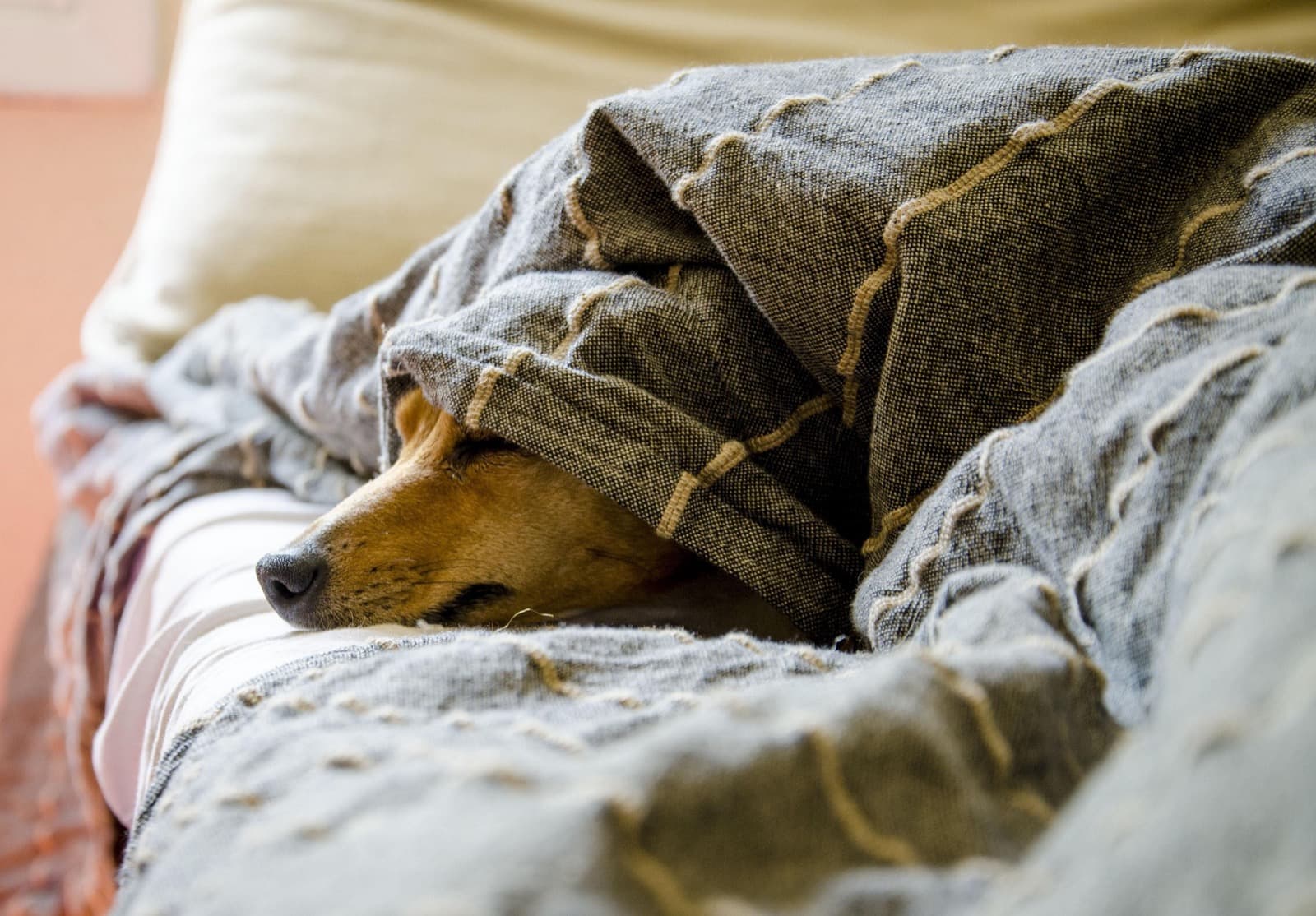
The most useful pain check an owner can do involves mostly watching, not touching. Done calmly and occasionally, it builds the baseline that makes real problems obvious early. 1
Step one: watch him move
Watch the rise from bed: smooth push-up, or front-first haul with a pause? Watch the walk away: even rhythm, or a head that bobs (head rises when the sore front leg bears weight)? Watch a slow circle in both directions, and the sit: square and controlled, or flopped sideways? Each of these takes seconds and reads volumes. 2
Step two: the gentle hands-on pass
On a relaxed dog, run flat palms slowly along neck, spine, shoulders, and hips — light pressure, watching his face rather than your hands. What you're looking for: flinching, skin twitching, tensing, head turning toward your hand, or a spot he keeps shifting away from. A reaction is information; stop there, note the location, and don't re-test it. 1
What you gather — where, when, which movements, how long — is exactly the information that makes a veterinary visit productive. You're not diagnosing; you're documenting. That division of labor is what gets painful dogs helped fastest. 2
Sources
- American Animal Hospital Association (AAHA) — pain management guidelines for dogs and cats. aaha.org
- American College of Veterinary Surgeons — lameness examination resources for owners. acvs.org
Our staff writers research every article against reputable veterinary references — veterinary manuals, university veterinary programs and professional association guidelines — working together with the biochemistry specialists at our facilities. Individual author profiles are being added.